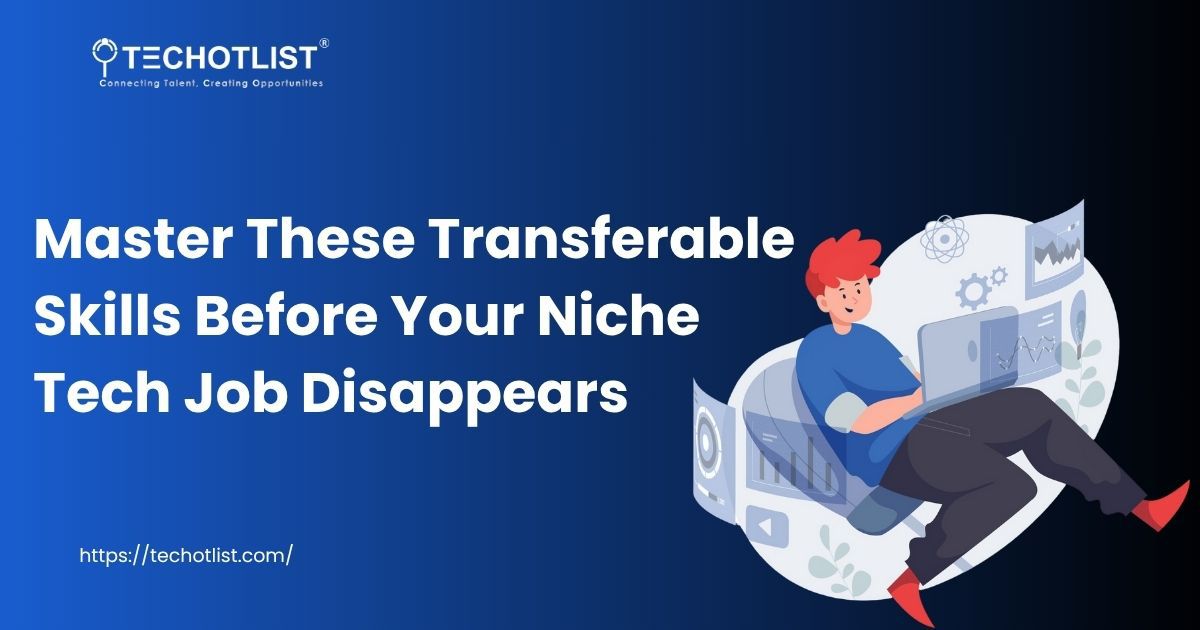
Master Transferable Skills in 2026 to Future-Proof Your Tech Career
TLDR
Transferable skills in tech are essential in 2026 as AI and automation reshape jobs. By developing skills like communication, adaptability, and problem-solving, professionals can stay relevant and future-proof their careers.
As the tech industry evolves at lightning speed, understanding the in-demand tech skills in 2026 is becoming essential. Roles that were once in high demand are now being automated, outsourced, or rendered obsolete.
From QA testers to certain DevOps roles, the pressure is mounting on tech professionals to stay relevant—not just through technical expertise, but through transferable skills in tech that endure beyond job titles and frameworks.
In this guide, you’ll discover:
- What transferable skills are
- Why they’re critical as AI and automation reshape the workforce in 2026
- The top transferable skills to future-proof your tech career
- How to develop these skills with real-world examples
What Are Transferable Skills in Tech and Why Do They Matter in 2026?
Transferable skills are core competencies that apply across multiple roles, industries, and technologies. Unlike niche coding languages or specialised toolsets, these skills remain relevant even as tech stacks evolve.
They equip you to adapt, pivot, and lead even as the job landscape transforms. In today’s environment, transferable skills in tech 2026 are essential for navigating rapid industry changes and staying competitive.
Key Reasons They Matter Today:
- Job security: If your niche role disappears, transferable skills make you marketable in adjacent roles
- Versatility: They increase your ability to contribute across functions—engineering, product, design, or leadership
- Leadership readiness: Senior roles value communication, strategy, and decision-making over tool-specific expertise
The Top 7 Transferable Skills Every Tech Professional Should Master
These skills are critical to staying relevant in the future of tech jobs, where adaptability and cross-functional thinking matter more than ever.
1. Critical Thinking and Problem Solving
Modern businesses value professionals who can analyze complexity, spot flaws, and propose practical solutions—not just write clean code.
Example:
A backend developer learns to troubleshoot production incidents across microservices and documents root causes to guide cross-team improvements. That’s problem-solving at scale.
Action Step:
Use frameworks like the “5 Whys” or “Fishbone Diagrams” in your retrospectives to develop deeper diagnostic thinking.
2. Effective Communication
Whether writing technical documentation, presenting roadmaps, or giving feedback, your ability to convey ideas with clarity is a major differentiator.
Practical Tip:
Practice writing executive summaries—brief, no-jargon explanations of what you built, why it matters, and what’s next.
Real-world scenario:
A data analyst who can explain model outputs in business terms is far more valuable than one who only shares technical metrics.
3. Adaptability and Learning Agility
In an environment where today’s popular framework may be outdated tomorrow, your ability to unlearn and relearn is everything.
This is especially important due to the AI impact on tech jobs, which requires continuous learning and flexibility.
Case Study:
A frontend developer specialized in AngularJS transitioned to React and UX principles within six months, eventually moving into a product-focused role.
Pro Tip:
Track industry trends quarterly and participate in hackathons or side projects to stay updated.
4. Collaboration and Cross-Functional Teaming
Gone are the days when tech professionals worked in silos. Today’s roles require consistent collaboration across teams.
Examples:
- Engineers co-creating user stories with product managers
- DevOps working closely with security and compliance teams
How to Build It:
Volunteer in cross-functional projects or shadow roles like product managers during planning cycles.
5. Project and Time Management
Managing deadlines, priorities, and expectations is critical in fast-paced tech environments.
Actionable Advice:
- Use Kanban boards or timeboxing techniques
- Break large goals into weekly deliverables
- Maintain clear communication with stakeholders
6. Business Acumen
Understanding how your work impacts business outcomes makes you indispensable.
Example:
A cloud engineer optimizing infrastructure costs and saving significant expenses gains faster career growth opportunities.
Action Step:
Learn to interpret metrics like revenue, churn rate, and user engagement—and align your work accordingly.
7. Emotional Intelligence (EQ)
As AI continues to automate logic-based tasks, emotional intelligence becomes a major differentiator.
Practical Application:
- Conduct meaningful 1-on-1 sessions with team members
- Stay composed during high-pressure situations
- Provide constructive feedback
Frequently Asked Questions (FAQs)
Q1: What are transferable skills in tech?
Transferable skills are abilities like communication, problem-solving, adaptability, and leadership that apply across different roles and industries.
Q2: Why are transferable skills important in 2026?
Due to the AI impact on tech jobs, roles are evolving rapidly. Transferable skills help professionals stay relevant even when technologies change.
Q3: Which transferable skills are most in demand?
Critical thinking, communication, adaptability, collaboration, and business acumen are among the most valuable skills.
Action Plan: How to Build Transferable Skills Starting Today
Building transferable skills in tech 2026 is key to staying competitive in a rapidly evolving job market.
- Audit your current role: Identify 2–3 transferable skills you already use
- Choose one to improve: Focus on developing it over 30 days
- Document your progress: Track where and how you applied each skill
Final Thoughts
Your niche tech role may evolve—or even disappear—but your core skills will remain relevant.
As the future of tech jobs continues to change, transferable skills act as your long-term career insurance. They allow you to adapt, grow, and stay competitive in an AI-driven world.
Whether you're a developer, data scientist, or systems engineer, mastering these capabilities will ensure you remain valuable and prepared for whatever comes next.
Related posts

The Biggest Career Mistake: Drifting Without Intention (Why Passive Careers Cost You 10 Years You’ll Never Get Back)
23 Apr 2026
“How to Know If It’s Time to Switch Roles (5 Honest Signs, Before You Impulsively Quit)”
23 Apr 2026
Why Most People Feel Stuck in Their Careers (It’s Not the Job, It’s These 5 Hidden Traps)
23 Apr 2026

US Work Visa Layoffs: Rights, Grace Period & What to Do After Job Loss
16 Apr 2026
Why High-Paying Tech Jobs Feel Meaningless in 2026
17 Apr 2026