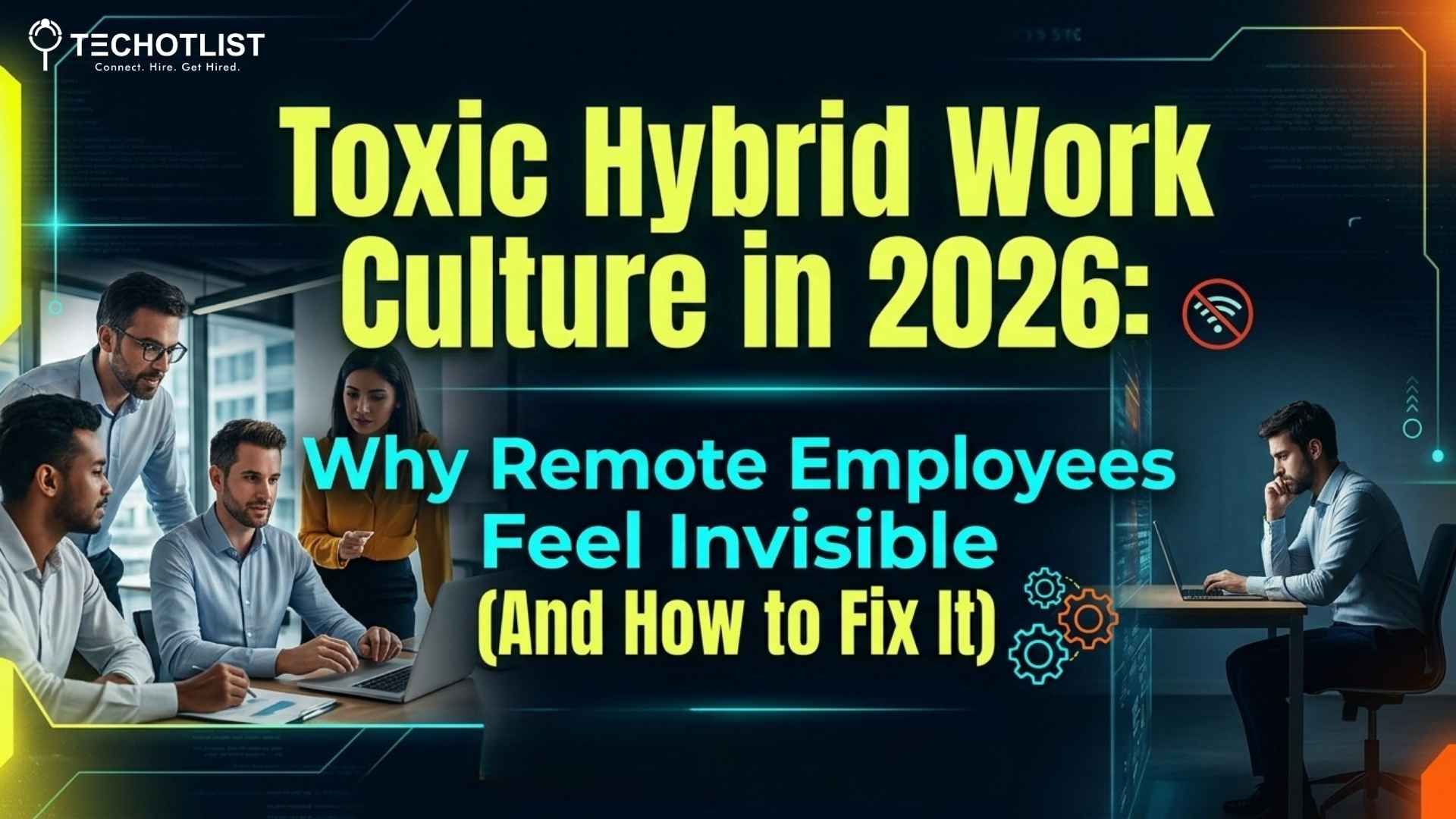
Toxic Hybrid Work Culture in 2026: Why Remote Employees Feel Invisible (And How to Fix It)
TLDR
In 2026, toxic hybrid work culture is making remote employees feel invisible and undervalued. The issue isn’t remote work itself, but poor execution, bias toward in-office employees, and lack of structured communication. To stay competitive, professionals must actively manage visibility, set boundaries, and advocate for fair evaluation systems.
Hybrid work was once seen as the perfect balance between flexibility and collaboration. But in 2026, many professionals are experiencing the downside of poorly designed systems.
Instead of freedom, employees are facing toxic hybrid work culture—where remote workers feel invisible, overlooked, and constantly pressured to prove their value.
If you’ve ever felt excluded from key decisions, undervalued compared to in-office peers, or stuck in endless “availability mode,” you’re not alone.
This guide breaks down why hybrid work is failing for many teams, how it impacts remote employees, and what you can do to protect your career and well-being.
While hybrid work promises flexibility, the negative impact of hybrid working is becoming more visible in 2026. Many professionals are now questioning whether the model truly delivers balance or simply introduces new forms of workplace inequality and stress.
What Is Toxic Hybrid Work Culture?
Toxic hybrid work culture refers to a dysfunctional workplace environment created by poorly implemented hybrid policies. Instead of enabling flexibility, it creates imbalance between remote and in-office employees.
This often leads to reduced visibility, communication gaps, biased evaluations, and increased burnout among remote workers.
Why Hybrid Work Is Failing in 2026
Hybrid work itself isn’t the problem—poor execution is. In 2026, several trends are making hybrid environments more toxic:
- Increased use of monitoring tools leading to micromanagement
- “Always-on” expectations due to async communication platforms
- Proximity bias favoring employees who work from the office
- Lack of structured hybrid meeting systems
- This shift is also fueling debates around hybrid vs in-person work, as organizations struggle to balance flexibility with fairness and productivity.
These factors contribute to a growing toxic hybrid work culture that disproportionately affects remote employees.
Common Features of a Toxic Hybrid Setup
- Proximity bias: In-office workers receive more visibility, trust, and promotions
- Communication gaps: Remote employees are excluded from informal discussions
- Inconsistent policies: Unequal enforcement of hybrid work rules
- Micromanagement: Excessive tracking of remote work activity
- Blurred boundaries: Pressure to stay online beyond working hours
Why Remote Employees Feel Invisible
One of the biggest impacts of toxic hybrid work culture is the invisibility of remote employees.
- Lack of spontaneous interactions with leadership
- Missed opportunities during informal office discussions
- Poorly managed hybrid meetings where remote voices are ignored
- Work being judged by presence instead of outcomes
Over time, this creates frustration, disengagement, and career stagnation.
Signs You’re in a Toxic Hybrid Work Culture
You may be dealing with a toxic hybrid setup if:
- You’re excluded from important meetings or decisions
- In-office peers receive more recognition for similar work
- You’re expected to respond instantly at all times
- Your manager focuses on activity instead of outcomes
- Your career growth feels stalled without clear feedback
If you notice multiple signs, it’s a strong indicator of a deeper cultural issue.
How to Survive and Grow in a Toxic Hybrid Culture
While changing company culture isn’t always immediate, you can take steps to protect your career:
1. Document Your Impact
Track your achievements, outcomes, and contributions regularly. Make your work visible through updates and reports.
2. Build Internal Relationships
Schedule virtual meetings, participate in team discussions, and stay connected with leadership.
3. Set Clear Boundaries
Define your working hours and communicate availability to avoid burnout.
4. Ask for Fair Evaluation Systems
Encourage performance reviews based on measurable outcomes, not visibility.
5. Know When to Move On
If the culture doesn’t improve, consider internal transfers or new opportunities that value remote work fairly.
Frequently Asked Questions
Q1: What is toxic hybrid work culture?
Toxic hybrid work culture is a workplace environment where hybrid policies create inequality between remote and in-office employees, leading to bias, poor visibility, and burnout.
Q2: Why do remote employees feel invisible?
Remote employees often miss informal interactions and face proximity bias, which reduces their visibility and influence.
Q3: Is hybrid work bad for careers?
Hybrid work is not inherently bad, but poor implementation can negatively impact career growth for remote employees.
Q4: How can I succeed in a hybrid workplace?
Focus on clear communication, visibility of your work, strong relationships, and measurable outcomes.
Future of Hybrid Work: Will It Stay?
The future of hybrid work depends on how organizations adapt to current challenges. While many companies continue to adopt hybrid models, the question remains: will hybrid work stay in its current form?
Experts suggest that hybrid work will evolve rather than disappear. Companies that invest in fair policies, better communication systems, and outcome-based performance metrics are more likely to succeed.
Without these changes, toxic hybrid work culture will continue to drive dissatisfaction and attrition.
Conclusion: Don’t Let Remote Work Become a Disadvantage
Hybrid work can still offer flexibility and balance—but only when implemented correctly.
If you constantly feel overlooked or pressured to prove your value, it may not be a performance issue, but a cultural one.
By taking control of your visibility, communication, and boundaries, you can navigate toxic hybrid work culture more effectively—and protect both your career and well-being.
Related posts
The Biggest Career Mistake: Drifting Without Intention (Why Passive Careers Cost You 10 Years You’ll Never Get Back)
23 Apr 2026
“How to Know If It’s Time to Switch Roles (5 Honest Signs, Before You Impulsively Quit)”
23 Apr 2026
Why Most People Feel Stuck in Their Careers (It’s Not the Job, It’s These 5 Hidden Traps)
23 Apr 2026
US Work Visa Layoffs: Rights, Grace Period & What to Do After Job Loss
16 Apr 2026
Why High-Paying Tech Jobs Feel Meaningless in 2026
17 Apr 2026