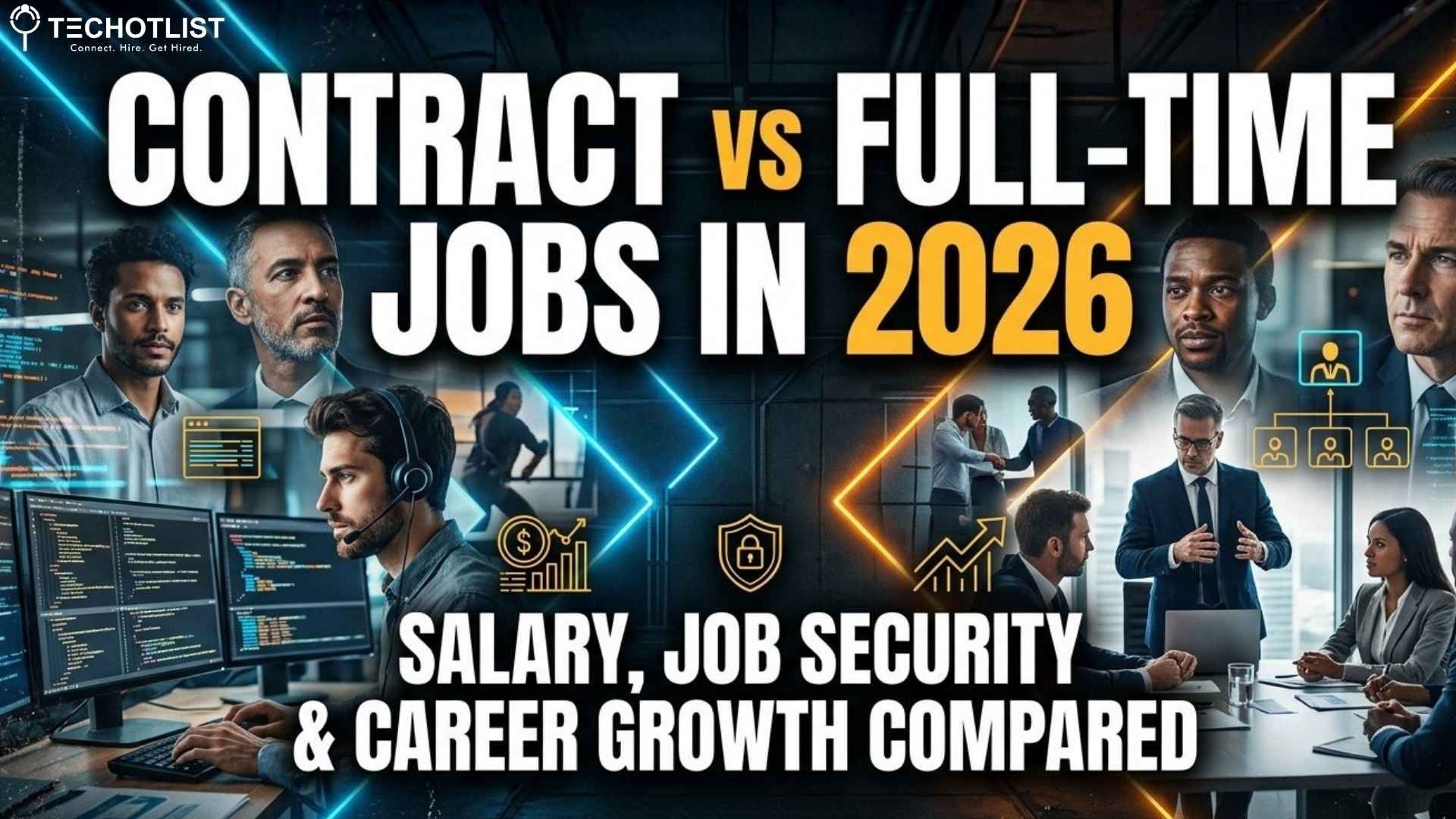
Contract vs Full-Time Jobs in 2026: Salary, Job Security & Career Growth Compared
In 2026, the debate between contract vs full-time jobs has become more important than ever. With AI-driven automation, global remote hiring, and ongoing tech layoffs, traditional job security is no longer guaranteed.
Many professionals are now asking: Is a full-time job still stable, or do contract roles offer better pay and flexibility?
This guide compares contract and full-time jobs based on salary, job security, benefits, flexibility, and career growth, helping you make the right decision in today’s evolving job market.
Understanding the Landscape in 2025
Before comparing, it's vital to understand the evolving context:
- AI is increasing demand for specialized contract roles
- Companies are reducing costs by hiring contract and freelance workers
- Remote work has enabled global job opportunities
- Layoffs have shown that even full-time roles are not completely secure
- More professionals are building multiple income streams (portfolio careers)
Key Differences Between Contract and Full-Time Roles
What Does Job Security Really Mean in 2026?
Financial Security
Contract jobs often pay 30–60% higher than full-time roles. However, income can be inconsistent, and there are no employer-provided benefits like insurance or paid leave.
Full-time jobs offer stable monthly income, health benefits, and paid time off, making them more reliable for long-term financial planning.
Skill Security (Career Resilience)
Contract roles expose professionals to multiple tools, industries, and real-world projects, helping them quickly adapt to changing market demands.
Full-time roles allow for deep expertise in a specific domain, but may limit exposure to new technologies and diverse environments.
Job Continuity
Contract roles can end suddenly after project completion or budget changes. Full-time jobs typically offer longer continuity, but are still vulnerable to layoffs in today’s market.
Case Study: Rahul’s Dilemma
Rahul, a cloud engineer with 8 years of experience, had two options:
- Full-time role offering stable salary and benefits
- High-paying contract role with no long-term guarantee
He chose the contract, gained advanced experience in AI and cloud integration, and later secured a higher-paying full-time position.
Which is Better: Contract or Full-Time Jobs?
Contract jobs are better for higher pay and flexibility, while full-time jobs are better for stability and employee benefits.
The right choice depends on your financial needs, risk tolerance, and long-term career goals.
Key Questions to Ask Before Choosing
- Do I need stable monthly income?
- Can I manage taxes, insurance, and savings independently?
- Do I prefer flexibility or structured career growth?
- Am I comfortable with gaps between projects or jobs?
- Do I want to explore multiple industries or specialize in one?
Actionable Tips Based on Your Choice
If You Choose Contract Jobs:
- Save at least 3–6 months of living expenses
- Set aside 25–30% of income for taxes
- Build a strong online portfolio (LinkedIn, GitHub, personal website)
- Work with multiple clients to reduce dependency on one source
If You Choose Full-Time Jobs:
- Continuously upskill in areas like AI, cloud, and automation
- Take ownership of your career growth
- Build additional income streams for extra security
- Maintain an emergency fund
Also Read: What to Know Before Taking Your First 1099 Tech Contract
Frequently Asked Questions
Q1: Are contract jobs better than full-time jobs in 2026?
Contract jobs offer higher pay and flexibility, while full-time roles provide stability and benefits. The better option depends on your career goals.
Q2: Do contract jobs pay more than full-time jobs?
Yes, contract jobs typically pay 30–60% more, but they do not include benefits or guaranteed income.
Q3: Are full-time jobs still secure?
Full-time jobs offer stability, but layoffs mean they are no longer completely secure in 2026.
Q4: Can contract jobs lead to full-time roles?
Yes, many professionals use contract roles to gain experience and transition into higher-paying full-time positions.
Final Thoughts
In 2026, job security is no longer defined by employment type. Whether you choose contract or full-time, your long-term success depends on your skills, adaptability, and financial planning.
Many professionals are now combining both approaches, creating hybrid careers for better stability and growth.
Related posts

The Biggest Career Mistake: Drifting Without Intention (Why Passive Careers Cost You 10 Years You’ll Never Get Back)
23 Apr 2026
“How to Know If It’s Time to Switch Roles (5 Honest Signs, Before You Impulsively Quit)”
23 Apr 2026

Why Most People Feel Stuck in Their Careers (It’s Not the Job, It’s These 5 Hidden Traps)
23 Apr 2026
US Work Visa Layoffs: Rights, Grace Period & What to Do After Job Loss
16 Apr 2026
Why High-Paying Tech Jobs Feel Meaningless in 2026
17 Apr 2026