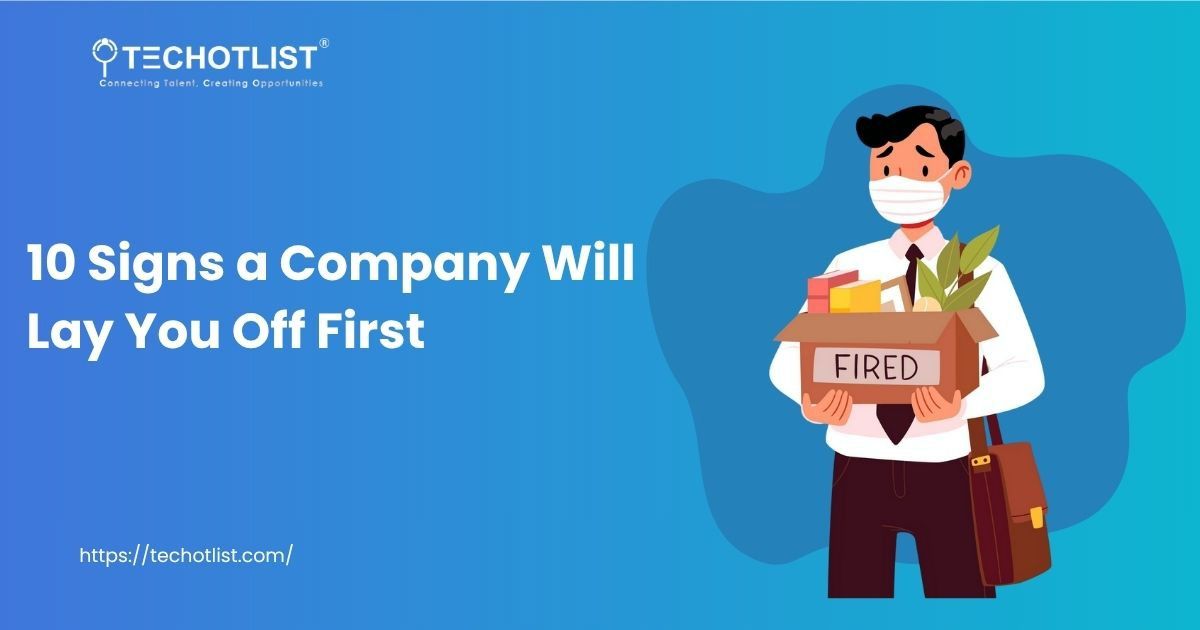
10 Signs You’ll Be Laid Off First in Tech (2026 Guide to Spot Risks Early)
TLDR
In 2026, tech layoffs are becoming more strategic and less predictable. Early warning signs like reduced visibility, project reassignment, vague performance reviews, and hiring freezes can indicate you’re at risk. Recognizing these signals early and taking proactive steps, like upskilling and networking, can help you stay ahead.
Know the Signs Before It’s Too Late
In today’s fast-moving tech industry, job security feels more like an illusion than a guarantee. With AI disruption, cost-cutting strategies, and constant restructuring, even high-performing employees are not immune to layoffs.
So what separates those who stay from those who go?
Often, it’s not performance—but subtle internal signals that indicate who might be laid off first. Recognizing these early warning signs can help you take action before it’s too late.
In this article, you'll discover 10 key signs you may be laid off first in tech, along with practical steps to protect your career.
Also Read: Why Your Tech Job Isn’t Safe in 2026: AI, Layoffs & the New Reality
1. You’re No Longer in the Loop
If your manager stops inviting you to meetings or key updates are shared without your involvement, it’s rarely accidental.
Being excluded from strategy discussions or planning sessions often signals that your role is no longer considered critical.
Actionable Tip: Ask for clarity on your role and proactively contribute to important deliverables.
2. Your Projects Are Being Reassigned
When your core responsibilities are gradually handed over to others—especially without explanation—it’s a strong signal of redundancy planning.
This is one of the most common signs you’ll be laid off first in tech.
Case Example: A senior UX designer noticed her projects being reassigned weeks before her role was eliminated during a cost-cutting phase.
3. Performance Reviews Suddenly Shift
If your past reviews were positive but recent feedback becomes vague, critical, or inconsistent, it may be part of internal documentation.
Look Out For:
- “Needs improvement” without clear direction
- Lack of constructive feedback
- Sudden focus on minor issues
This shift may not reflect your performance—but a change in internal positioning.
4. Leadership Changes Signal Realignment
New leadership often brings new priorities, teams, and strategies.
If your role doesn’t align with the new direction, you may be seen as part of the “old structure.”
Pro Tip: Stay adaptable and align your work with new business goals.
5. Your Role Is Easily Automated or Outsourced
In 2026, roles involving repetitive tasks or predictable workflows are more vulnerable due to AI and outsourcing.
Self-Check:
- Can your work be automated?
- Can it be outsourced at a lower cost?
- Are others being trained in your responsibilities?
If yes, your role may be at higher risk.
6. The Budget Conversation Avoids You
Layoffs often begin where financial impact is lowest.
If your team isn’t directly tied to revenue or core product development, your position may be more vulnerable.
Roles Often Affected First:
- HR and Admin
- Support and QA
- Non-core product teams
7. Internal Transfer Requests Are Ignored
If you’ve shown interest in switching roles or teams but your requests are repeatedly delayed or ignored, it may be intentional.
Companies often avoid investing in employees they don’t plan to retain.
Next Step: Start exploring external opportunities while continuing internal conversations.
8. The Company Is Quietly Freezing Hiring
Hiring freezes are often early indicators of layoffs.
Watch for Signs:
- Job postings disappearing
- Interviews being cancelled
- Promotions and bonuses being paused
These signals often appear weeks before layoffs are announced.
9. You’re Asked to Document Everything
Being asked to suddenly document processes you’ve long handled can be a red flag.
While documentation is normal, urgency or sudden requests may indicate knowledge transfer before role elimination.
Real Scenario: An IT professional was asked to create detailed SOPs shortly before their role was made redundant.
10. Your Manager Becomes Distant or Vague
If communication becomes less frequent, feedback turns unclear, or interactions feel purely procedural, your manager may already be preparing for changes.
What to Do: Stay professional, document your work, and start preparing for next steps.
Also Read: Quiet Cutting in Tech: The Silent Layoff Strategy Pushing Employees to Quit (2026)
Frequently Asked Questions (FAQ)
Q1: Why are companies laying off employees in 2026?
Companies are reducing workforce due to AI automation, cost-cutting, and organizational restructuring.
Q2: Can high performers be laid off?
Yes. Layoffs are often based on business needs, not just performance.
Q3: Is it paranoia to worry about layoffs?
No. Being aware of warning signs helps you prepare and stay ahead.
What You Should Do Next
If multiple signs apply to you, take action early:
- Update your resume and LinkedIn profile
- Strengthen your professional network
- Explore internal and external opportunities
- Upskill in high-demand areas like AI, data, and product
- Prepare financially and mentally for potential changes
Summary
Identifying early warning signs of layoffs can make the difference between being caught off guard and staying ahead.
In today’s tech landscape, job security comes from adaptability, visibility, and continuous learning.
By recognizing these signals and acting early, you can turn uncertainty into opportunity—and stay in control of your career.
Related posts

The Biggest Career Mistake: Drifting Without Intention (Why Passive Careers Cost You 10 Years You’ll Never Get Back)
23 Apr 2026
“How to Know If It’s Time to Switch Roles (5 Honest Signs, Before You Impulsively Quit)”
23 Apr 2026

Why Most People Feel Stuck in Their Careers (It’s Not the Job, It’s These 5 Hidden Traps)
23 Apr 2026
US Work Visa Layoffs: Rights, Grace Period & What to Do After Job Loss
16 Apr 2026
Why High-Paying Tech Jobs Feel Meaningless in 2026
17 Apr 2026