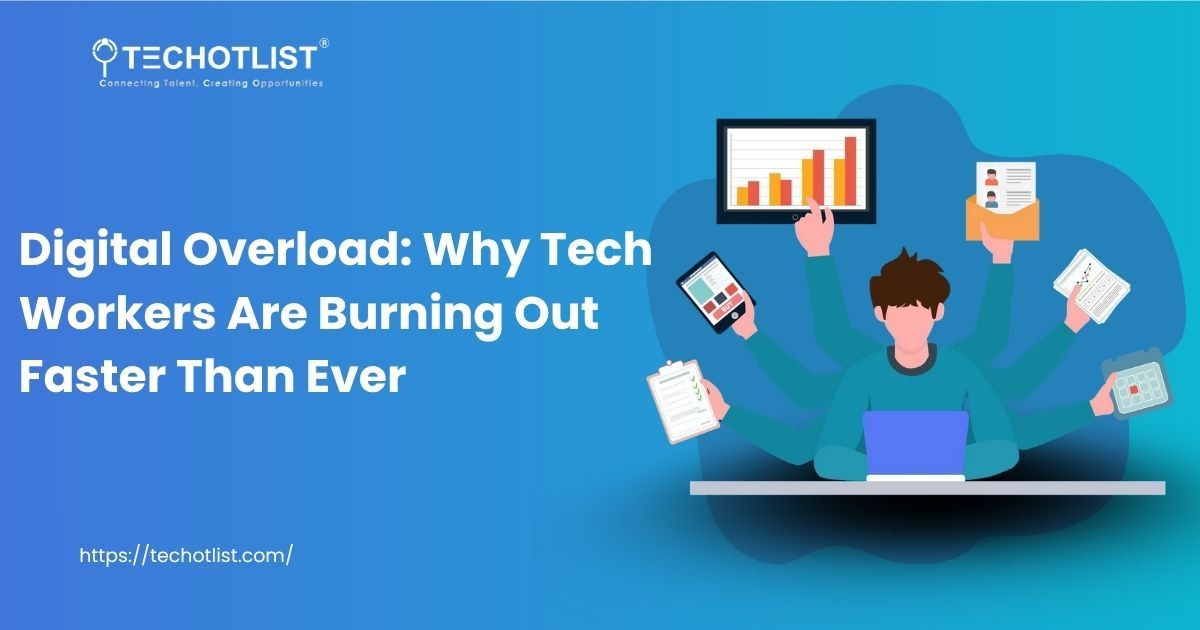
Tech Burnout 2025: Digital Overload Is Crushing Developers & Engineers
In the high-stakes world of technology, speed and innovation rule. But beneath the shiny surface of cutting-edge development lies a rising tide of emotional exhaustion, disengagement, and chronic fatigue. Today’s tech professionals, engineers, developers, designers, and product managers, are facing burnout at rates never seen before.
In this article, we’ll explore what’s fueling this trend, how digital overload contributes to faster burnout, and what individuals and organizations can do to reverse it. Whether you're a tech worker, team leader, or job seeker navigating today’s AI-dominated landscape, this deep dive will help you better understand, and counter, the burnout epidemic.
The Burnout Crisis in Tech: A Modern Epidemic
Burnout isn’t just a buzzword. It's officially recognized by the World Health Organization as a syndrome caused by chronic workplace stress. And in the tech industry, the problem is accelerating.
Why is burnout growing in tech?
- Always-On Culture: With Slack messages at midnight and weekend Jira updates, the line between work and life is nearly nonexistent.
- Remote Work Without Boundaries: While flexible work offers freedom, it often erodes boundaries. Home becomes the office, and rest becomes elusive.
- High Cognitive Load: Constant learning, debugging, and problem-solving strain mental energy.
- AI Pressure: With automation and generative AI tools transforming workflows, workers fear being replaced or left behind.
A 2024 industry survey revealed that 68% of tech workers reported experiencing symptoms of burnout, up from 49% just three years prior.
Digital Overload: The Hidden Triggers
Digital overload refers to the mental fatigue caused by constant digital interactions, from code reviews and system monitoring to video calls and project management tools.
Key signs of digital overload:
- Frequent mental fog or inability to concentrate
- Irritability after meetings or screen-heavy days
- Physical symptoms like eye strain, headaches, or insomnia
- Feelings of detachment or “checking out” at work
When every task demands switching between multiple tools, Slack, Jira, GitHub, Notion, Zoom, the result is context switching fatigue. This fragments attention and makes even simple tasks exhausting.
Case Study: How Burnout Nearly Cost a Senior Developer His Career
Rahul, a senior backend engineer at a mid-sized fintech startup, was once a high-performing contributor. But by late 2023, he began to struggle. Despite working 10–12 hour days, tasks piled up, deadlines slipped, and his engagement plummeted.
It wasn’t about technical skill. Rahul was suffering from digital burnout.
- His day started with urgent Slack messages.
- Half his time was spent in virtual meetings.
- He rarely took breaks and hadn’t used vacation days in over a year.
His company only noticed when he formally requested a leave of absence. After six weeks off, and with coaching support, Rahul returned this time with non-negotiable boundaries and better team coordination practices.
Actionable Strategies to Prevent Burnout
Tech professionals and companies alike must take proactive steps to identify and reduce burnout.
For individuals:
- Set Digital Boundaries
Avoid checking messages outside work hours. Use “do not disturb” modes intentionally. - Schedule Focus Blocks
Block out 2–3 hours daily for deep work without meetings or interruptions. - Detox Weekly
Designate one day a week for minimal screen time or non-digital activities. - Invest in Recovery
Quality sleep, exercise, and time away from screens are non-negotiable.
For teams and organizations:
- Normalize Mental Health Days
Treat mental health like physical health with policy support and leader modeling. - Reduce Tool Sprawl
Consolidate platforms and reduce redundant communication tools. - Encourage Asynchronous Communication
Avoid forcing real-time responses unless truly urgent. - Track and Address Workload
Regularly audit workloads and rebalance when burnout signs emerge.
The AI Effect: Job Anxiety and Burnout
Generative AI tools like GitHub Copilot and ChatGPT are boosting productivity, but also stoking anxiety. Workers wonder: Will I be replaced? Do I need to learn faster than ever?
While AI can assist, it also adds another layer of complexity. Upskilling becomes urgent, and the cognitive load increases.
Tip: Rather than racing AI, aim to work alongside it. Develop meta-skills like problem framing, critical thinking, and communication, skills AI still can’t replicate
FAQs
Is burnout a temporary condition or a long-term issue?
If left unaddressed, burnout can lead to long-term mental and physical health problems. Early intervention is key.
Can switching jobs reduce burnout?
It depends. If the root causes (overwork, poor boundaries, toxic culture) follow you, burnout may resurface. Assess work style compatibility before changing roles.
How can managers detect burnout in their teams?
Watch for increased absenteeism, reduced performance, emotional withdrawal, or sharp changes in engagement. Encourage 1:1 check-ins to surface hidden stress.
Conclusion: A Call to Recalibrate
Digital burnout isn’t just a personal issue it’s a tech industry crisis. For sustainable innovation, we need sustainable work environments. If you’re a tech worker feeling stretched too thin, start by setting clear boundaries, using digital tools mindfully, and advocating for wellness at work.
Next step: Audit your current schedule. Which hours drain you? Which apps demand constant attention? Reclaim time, space, and energy—because burnout is preventable, but only if we choose to act.
Related posts

Mobile Development Career Paths in the U.S.: iOS vs Android vs Cross-Platform
16 Jul 2025

The Role of UI/UX in U.S. Product Teams: Design Thinking, Jobs, and Visa-Focused Portfolios
10 Jul 2025

AI vs Cybersecurity in 2025: Which Career Path Pays More?
15 Jul 2025

Imposter Syndrome in Senior Engineers: Navigating the Hidden Reality of 2026 Tech
03 Apr 2026