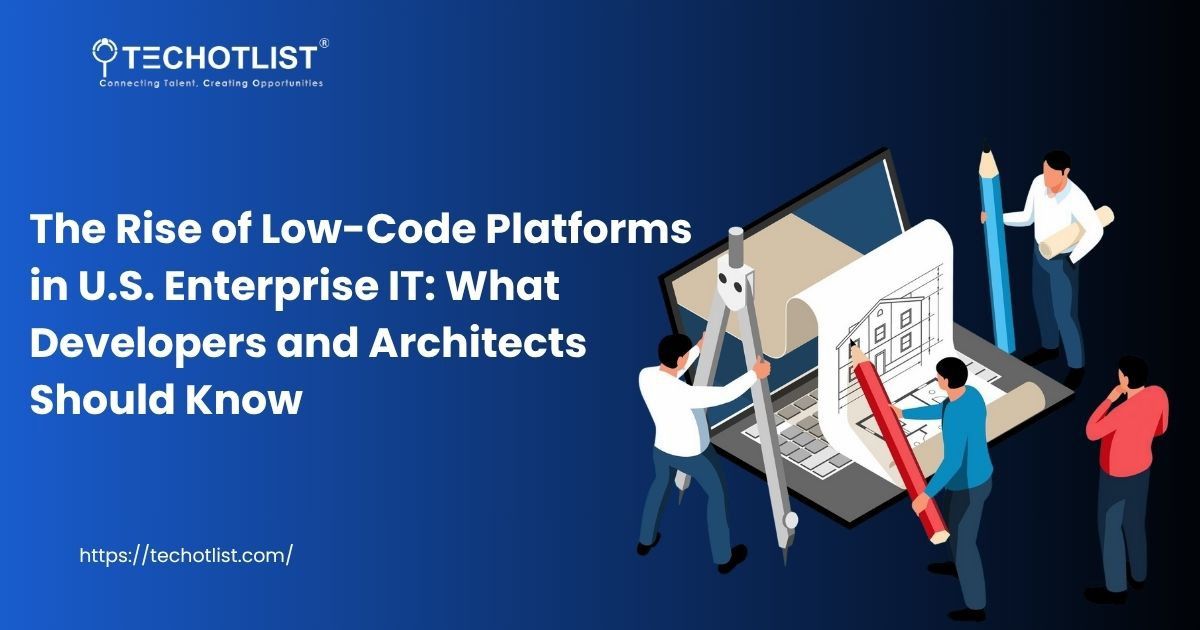
The Rise of Low-Code Platforms in U.S. Enterprise IT: What Developers and Architects Should Know
Introduction: Low-Code’s Mainstream Moment in U.S. Tech
In 2025, low-code platforms are no longer niche tools, they're at the heart of enterprise digital transformation. According to Gartner, by 2026, over 70% of new enterprise applications will be built using low-code or no-code technologies, up from 25% in 2020.
From banking workflows to healthcare portals and retail dashboards, low-code platforms in U.S. enterprise IT are enabling rapid development, easier scalability, and broader collaboration between IT and business teams. For developers, architects, and tech leaders, understanding where low-code fits, and where it doesn’t, is now essential.
This article explores the impact of low-code adoption on career paths, architectural best practices, developer roles, and hiring trends in the U.S. tech market.
“Low-code doesn’t eliminate developers, it empowers them to focus on what matters most: logic, scale, and security.”
- Jason Wong, VP Analyst, Gartner
What Are Low-Code Platforms, and Why Are They Thriving?
Low-code development platforms (LCDPs) offer visual interfaces and prebuilt components to design applications with minimal hand coding. Popular platforms include:
Microsoft Power Platform (Power Apps + Power Automate)
OutSystems
Mendix
Appian
Salesforce Lightning Platform
Why Enterprises Are Adopting Low-Code:
Faster time to market for internal tools and client portals
Cross-functional collaboration between IT and operations
Ease of integrating with legacy systems via connectors/APIs
Lower cost of experimentation and MVP development
According to Forrester, 65% of U.S. enterprises using low-code platforms reduced development time by at least 50% on average.
Where Developers and Architects Fit into the Low-Code Movement
For Developers:
Low-code is not about replacing engineers, it’s about abstracting repetitive tasks so developers can focus on performance, security, and customization.
Skills That Complement Low-Code:
JavaScript, TypeScript – for extending components or writing custom logic
REST APIs & Webhooks – to connect low-code apps with external systems
CI/CD & DevOps – version control, deployment automation
Cloud functions (e.g., AWS Lambda, Azure Functions) – when platform limits are exceeded
“Low-code is a multiplier for developer productivity, especially in hybrid teams where speed and consistency matter.”
- Charles Lamanna, CVP, Microsoft Power Platform
For Architects:
Architects play a critical role in:
Governance and scalability of low-code solutions
Choosing between low-code vs full-code stacks
Security enforcement and compliance
API design and event-driven workflows
Low-code platforms still need strong architecture to prevent sprawl, duplication, and vendor lock-in.
Job Roles and Salaries in the Low-Code Ecosystem
| Role Title | Avg U.S. Salary |
|---|---|
| Low-Code Developer | $110K – $135K |
| Power Platform Engineer | $115K – $140K |
| Salesforce Developer (Lightning) | $125K – $150K |
| Appian/Mendix Consultant | $120K – $145K |
| Enterprise Architect (Low-Code Integration) | $145K – $175K |
Industries Embracing Low-Code:
Banking & Insurance: Workflow automation, loan origination tools
Healthcare: Patient onboarding, scheduling portals
Retail: Loyalty apps, internal inventory systems
Government: Permit management, citizen services
Low-Code + Visa Sponsorship: What International Developers Should Know
Low-code roles, especially in Microsoft, Salesforce, and Appian ecosystems, are being increasingly sponsored under H-1B and STEM OPT programs, particularly when paired with full-stack experience or enterprise architecture skills.
Companies Sponsoring Low-Code Talent:
Microsoft
Cognizant, TCS, Infosys (U.S. delivery teams)
Capgemini
Salesforce Partners (Slalom, Deloitte, Accenture)
USCIS data confirms growing demand for H-1B roles classified under “Software Developer, Applications” and “Systems Analyst” with low-code platforms as core technologies.
“Consulting firms are hiring hybrid profiles, those who understand business logic and can extend low-code platforms with full-stack skills.”
- Ritu Aggarwal, Low-Code Solutions Lead, Capgemini
Case Study: Low-Code at a Fortune 100 Insurance Firm
A Fortune 100 insurance company used Power Apps and Power Automate to digitize claims processing. By integrating with Azure Functions and Dataverse, they created a unified dashboard with:
40% faster processing times
API integrations with legacy claim systems
Role-based access controls and audit trails
This low-code + pro-code hybrid model saved the firm over $3.2M annually in IT operations.
Practical Insights for Developers & Architects Entering the Low-Code Space
Learn one dominant platform (e.g., Power Platform or Mendix)
Understand how to integrate low-code with APIs, cloud functions, and backend services
Contribute to low-code templates or solutions in GitHub and community forums
Use certification programs like PL-400 (Microsoft) or Mendix Rapid Developer
Explore curated jobs, upskilling guides, and certification resources on Techotlist
Conclusion: Low-Code Is a Force Multiplier, Not a Threat
Low-code development in U.S. enterprise IT is not a passing trend, it’s a strategic shift. For developers and architects, embracing this change means unlocking new types of impact, faster delivery, and hybrid innovation models.
Techotlist.com empowers modern tech professionals to stay ahead, whether you’re learning a low-code platform, seeking a visa-sponsored job, or looking to lead the next enterprise transformation.
Related posts

Stop Hiding Your $150K Skill, How Prompt Engineering Can Boost Your Salary by $18K+
31 Dec 2025
AI Skills Fortune 500 Companies Are Hiring for in 2026
10 Apr 2026

AI in Software Testing: How to Catch 90% of Bugs Before Release
31 Dec 2025
High Paying AI Jobs in 2026: Why Product Managers Are Leading the Shift
01 Apr 2026
Why This AI Question Will Dominate 2025 Job Interviews (And How to Answer It)
12 Aug 2025