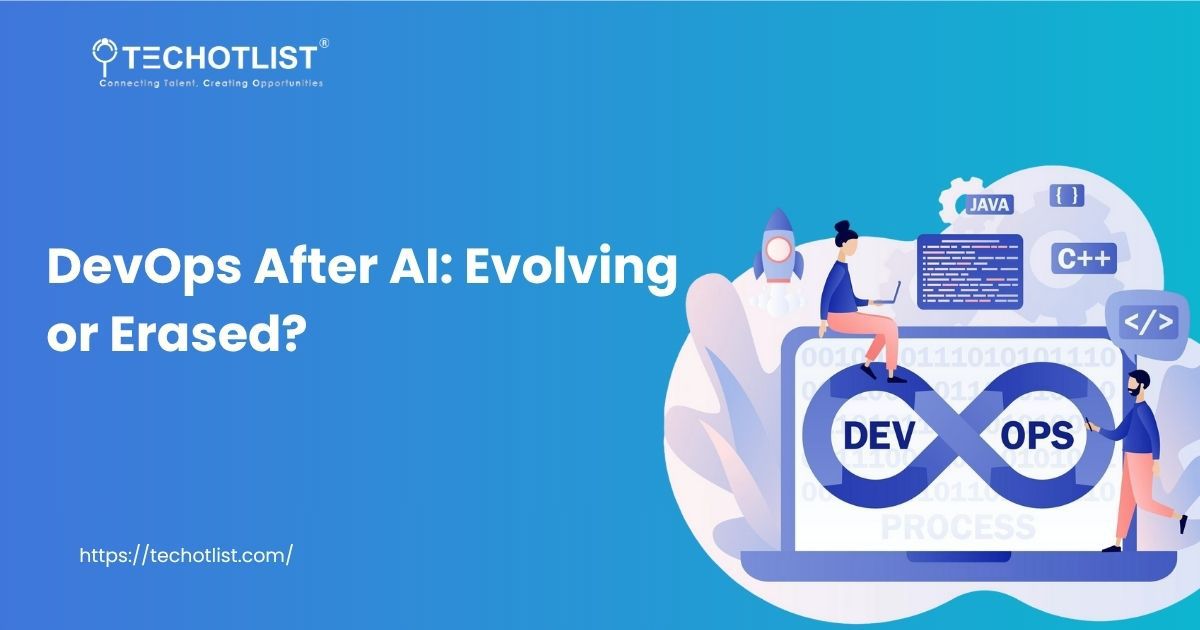
DevOps After AI: Evolving or Erased?
The rise of Artificial Intelligence (AI) is transforming industries, reshaping job roles, and revolutionizing processes. Among the most affected is the field of DevOps, where automation, collaboration, and continuous integration have long been key drivers. With AI stepping into the spotlight, the question arises: Is DevOps evolving, or is it being erased by the advancements in AI?
In this article, we’ll explore the future of DevOps in an AI-driven world, addressing the implications, challenges, and opportunities for tech professionals. We will dive deep into how AI is impacting the DevOps lifecycle, and whether professionals in this space need to evolve their skills to remain relevant.
The Role of DevOps Today
DevOps, short for Development and Operations, is a set of practices that emphasizes collaboration between software developers and IT operations teams. Its goal is to shorten the systems development lifecycle, ensuring continuous delivery and automation of processes.
Key responsibilities of DevOps professionals include:
Automation of deployment pipelines to increase efficiency.
Monitoring and feedback loops for continuous improvement.
Collaboration across teams to create a seamless development process.
Ensuring security compliance through continuous testing and monitoring.
However, as AI technologies evolve, many wonder if these tasks will be automated or replaced entirely by intelligent systems.
AI’s Impact on DevOps: A Game Changer?
AI is already transforming several aspects of IT, including operations, monitoring, and testing. Tools powered by AI can automate once manual tasks, such as:
Automated Testing: AI-driven test automation tools are capable of running millions of tests in record time, detecting issues earlier in the development cycle.
Predictive Maintenance: AI systems can monitor systems in real-time, predict potential failures, and provide insights into preventive actions.
Continuous Integration/Continuous Deployment (CI/CD): AI enhances CI/CD processes by automatically optimizing code, testing changes, and streamlining deployment workflows.
This raises the question: with AI becoming more efficient, will traditional DevOps professionals be replaced by machines? Or will AI enhance the DevOps process, making professionals more effective?
AI and the Evolution of DevOps Roles
Instead of erasing DevOps, AI is likely to evolve the profession. AI will handle repetitive tasks, such as monitoring and automated testing, freeing up DevOps professionals to focus on more complex issues. Let’s break down how DevOps professionals can evolve their skill set to stay ahead:
1. From Manual to Strategic
As AI takes over the repetitive elements of the DevOps lifecycle, professionals can shift their focus toward higher-level strategic tasks. This may include designing more effective CI/CD pipelines, enhancing automation strategies, and improving collaboration across teams.
2. Embracing AI-Driven Tools
DevOps professionals who embrace AI-powered tools will remain relevant. Learning to use AI tools for automated testing, deployment, and monitoring will be critical. DevOps engineers who understand how AI can complement their workflows will have a competitive edge.
3. Focus on Security and Compliance
AI can certainly automate many parts of the DevOps pipeline, but security and compliance remain human-centric tasks. AI can assist, but DevOps professionals will still need to oversee and ensure that systems adhere to industry standards and regulations.
4. AI as a Collaboration Tool
AI-powered collaboration tools can enhance communication between developers, operations teams, and other stakeholders. DevOps professionals can leverage these tools to ensure smoother workflows, identify bottlenecks, and accelerate software delivery.
Case Study: AI-Driven DevOps in Action
One notable example of AI transforming DevOps is Netflix. Netflix uses machine learning models to predict system failures before they happen. By analyzing real-time data, AI systems can recommend actions to prevent downtime or disruptions in service. In this case, AI doesn't replace DevOps engineers but provides them with better insights and recommendations to improve performance.
Similarly, Amazon Web Services (AWS) and Google Cloud offer AI-driven tools for continuous integration and deployment, showcasing how AI can be used to augment, rather than replace, the work of DevOps professionals.
Challenges of AI in DevOps
Despite the promise of AI, there are challenges in integrating these technologies into the DevOps workflow:
Complexity in Integration: Integrating AI into legacy DevOps systems can be complex, requiring significant time and resources.
AI Bias and Errors: AI systems are only as good as the data they are trained on. If not properly monitored, they could introduce biases or make decisions that could affect system performance.
Job Displacement Concerns: There is growing concern that AI will replace jobs, especially for those in automation-heavy roles within DevOps.
AI and DevOps: What Does the Future Hold?
AI is here to stay, and it is transforming the DevOps landscape. However, this transformation does not mean that DevOps will be erased. Instead, DevOps will evolve to become more focused on strategic decision-making, problem-solving, and high-level oversight. AI will handle the repetitive tasks, while human professionals will ensure the integration of AI technologies, making sure they work seamlessly with human-driven operations.
Frequently Asked Questions (FAQs)
1. Will AI replace DevOps engineers?
AI is more likely to augment the role of DevOps engineers rather than replace them. While AI can automate repetitive tasks, human professionals will still be needed for strategic decision-making and complex problem-solving.
2. How can DevOps professionals prepare for AI-driven changes?
DevOps professionals can stay relevant by learning how to use AI tools, embracing automation, and focusing on higher-level responsibilities such as security, compliance, and system optimization.
3. Is AI integration into DevOps difficult?
Integrating AI into existing DevOps workflows can be complex, especially for legacy systems. However, the benefits, such as improved efficiency and predictive capabilities, make the effort worthwhile.
Conclusion:
The impact of AI on DevOps is inevitable, but it is far from eliminating the need for human professionals. Instead, AI will serve as a tool to enhance DevOps practices, automate repetitive tasks, and provide insights that allow professionals to focus on more strategic aspects of the lifecycle. By embracing these advancements and adapting to the changing landscape, DevOps professionals can continue to thrive in an AI-driven world.
As AI continues to evolve, so too must the DevOps role. The question is not whether DevOps will be erased but how it will evolve. Professionals who can adapt, learn new tools, and focus on the strategic integration of AI will continue to play an essential role in the future of DevOps.
By staying ahead of AI advancements, DevOps professionals can ensure that their skills remain in high demand. The future is AI-driven, but it’s also human-centric.
Related posts

Stop Hiding Your $150K Skill, How Prompt Engineering Can Boost Your Salary by $18K+
31 Dec 2025

AI Skills Fortune 500 Companies Are Hiring for in 2026
10 Apr 2026
AI in Software Testing: How to Catch 90% of Bugs Before Release
31 Dec 2025
High Paying AI Jobs in 2026: Why Product Managers Are Leading the Shift
01 Apr 2026
Why This AI Question Will Dominate 2025 Job Interviews (And How to Answer It)
12 Aug 2025